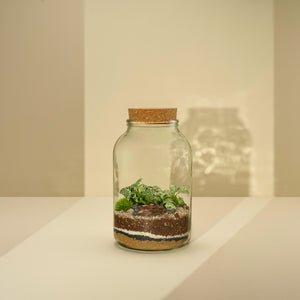
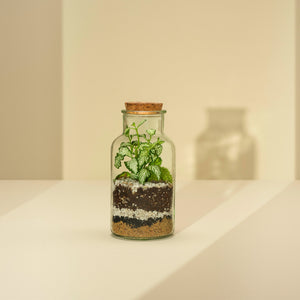
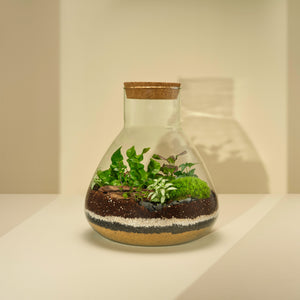
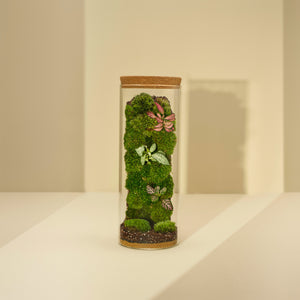


At first glance, all terrariums look similar: glass, plants, a bit of soil. But the moment you bring one home, the difference between a closed and an open terrarium becomes very real. One creates its own climate and asks almost nothing from you. The other depends on you entirely. Choosing the wrong type isn’t a small mistake—it’s usually why people think they’re “bad with plants.”
The truth is simple: plants don’t fail in terrariums. Environments do.
How Closed Terrariums Work
A closed terrarium is a sealed or nearly sealed ecosystem. Once it’s set up correctly, it begins to regulate itself. Moisture evaporates from the soil and leaves, condenses on the glass, and slowly returns back down. This internal water cycle creates consistently high humidity, which is the defining feature of a closed terrarium.
This is why terrarium humidity care matters so much here. Too little moisture and the system stalls. Too much and you invite mold. When balanced, however, the terrarium reaches a quiet equilibrium where plants grow slowly, steadily, and without stress.
Closed terrariums are designed for plants that evolved in damp, sheltered environments—forest floors, tropical understories, places where air doesn’t rush and water doesn’t disappear overnight. Mosses, Fittonia, ferns, Hypoesthes, compact Pilea, and even small Ficus varieties thrive here because the conditions stay predictable. That stability is the entire point.
At Halaman Habitat, closed terrariums are about trust. You build the ecosystem once, carefully, and then step back. The terrarium doesn’t need constant fixing. It just needs to be left alone.

How Open Terrariums Work
Open terrariums are a different philosophy entirely. There is no lid, no sealed cycle, no stored humidity. Whatever moisture you add will eventually leave. Air moves freely, soil dries faster, and the environment shifts with the room it’s in.
This makes open terrariums less forgiving but more flexible. They suit plants that dislike constant moisture and need airflow to stay healthy. Succulents, cacti, and other drought-tolerant species belong here, not because they’re trendy, but because sealed humidity would kill them.
Open terrarium tips always come back to awareness. You have to notice when the soil is dry, when light changes with the seasons, and when a plant starts stretching or shrinking. These terrariums don’t run themselves. They reflect how attentive you are.
That doesn’t make them worse—just more honest.

Closed vs Open: What It Really Comes Down To
The real difference between closed and open terrariums isn’t the glass or the lid. It’s control.
Closed terrariums lock in moisture and stability. They’re ideal if you want something that feels alive but doesn’t demand daily attention. Open terrariums give you freedom, but they also expect you to show up regularly.
If you’re drawn to lush, green, almost storybook-like landscapes, closed terrarium plants will always make more sense. If you prefer clean lines, dry soil, and sculptural forms, open terrariums are the right choice.
Trying to force one style of plant into the wrong system is where things fall apart.
Which One Is Right for You?
If you want a living ecosystem that mirrors nature’s patience, choose a closed terrarium. It’s slower, calmer, and surprisingly resilient when done right.
If you enjoy active care and don’t mind regular maintenance, an open terrarium will suit you better. It’s less about balance and more about routine.
At Halaman Habitat, we don’t believe one is better than the other. We believe in choosing systems that match both the plants and the people who live with them. When those align, terrariums stop being decorations and start becoming something closer to home.