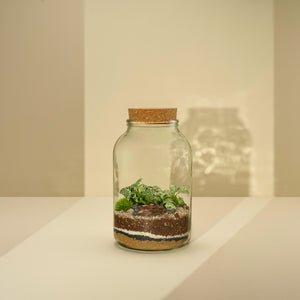
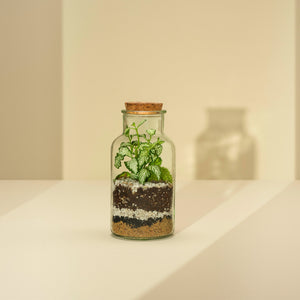
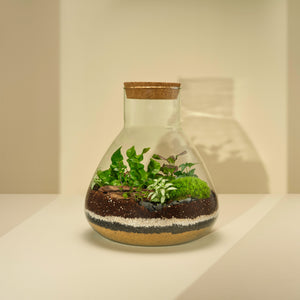
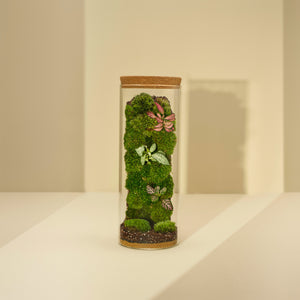

Terrariums are beautiful, self-contained ecosystems that bring a touch of nature into your home. However, maintaining the perfect environment in your terrarium can sometimes lead to unwanted guests like mould. Mould can quickly become a problem, threatening the health of your plants and the overall aesthetics of your miniature garden. Don't worry—this guide will walk you through how to fix and prevent mould in your terrarium.

Understanding Mould in Terrariums
It's important to know that Mould isn’t always a bad thing. Having some mycelium in your substrate is beneficial because it helps break down organic matter. However, it can also contribute to mould buildup in your terrarium, especially given the high humidity levels in closed terrarium environments.
Mould thrives in warm, damp, and humid environments, making terrariums a perfect breeding ground if not properly managed. Mould can appear as white, green, black, or even blue fuzzy spots on the soil, plants, and decorations. It can damage plant roots, stunt growth, and potentially kill your plants if left unchecked.
Steps to Fix Mould in Your Terrarium
1. Identify the Mould
The first step is to identify where the mould is growing. Common areas include the soil surface, plant leaves, and decorative elements like rocks or wood.
2. Isolate the Affected Plants
If only a few plants are affected, carefully remove them from the terrarium to prevent the mould from spreading. Inspect the roots and trim off any parts that are severely infected.
3. Remove Contaminated Soil
If the mould is growing on the soil, it’s essential to remove the top layer of contaminated soil. Replace it with fresh, sterile soil to prevent the mould from returning.
4. Clean the Terrarium
Thoroughly clean your terrarium to eliminate any mould spores. Use a mixture of water and mild soap or a vinegar solution (1 part vinegar to 3 parts water) or Hydrogen Peroxide in the place of vinegar. Wipe the glass, decorations, and interior surfaces. Rinse well to ensure no soap or vinegar residue remains.
5. Adjust Watering Practices
Overwatering is a common cause of mould. Make sure you are not overwatering your plants. Allow the soil to dry out slightly between waterings, and use a spray bottle to control the moisture level more accurately.
6. Introduce Bioactive Managers
All our terrariums comes with their own little helpers called springtails (tiny insects that feed on mould) they act as a biological control method.
If none of these methods work, reach out to us if your terrarium has mold and you don't know how to fix it or you are in need of some springtails.

Preventing Mould in the Future
Once you’ve tackled the mould problem, it’s essential to implement preventive measures to avoid future issues:
1. Proper Lighting
Ensure your terrarium receives adequate but not excessive light. Natural light is beneficial, but direct sunlight can overheat the terrarium and promote mould growth. Consider using grow lights designed for terrariums or make sure your terrarium is placed where there is bright indirect light.
2. Use Sterile Soil and Decorations
Always use sterile soil and clean decorations before adding them to your terrarium. This helps to prevent introducing mould spores into the environment. All materials and tools we use are sterilized. If you want to make your own terrarium, you can check our DIY Terrarium Kit that has everything you need and guarantees that all things you will use are clean and sterilized.
3. Regular Maintenance
Perform regular maintenance on your terrarium. Trim dead or decaying plant material, check for signs of mould, and clean the glass to allow maximum light penetration.
Mould in a terrarium can be a frustrating problem, but with the right approach, it can be managed and prevented. By identifying the cause, cleaning effectively, and maintaining optimal conditions, you can keep your terrarium healthy and beautiful. Remember, a little proactive care goes a long way in preserving your miniature ecosystem.